Intro / Why It Works
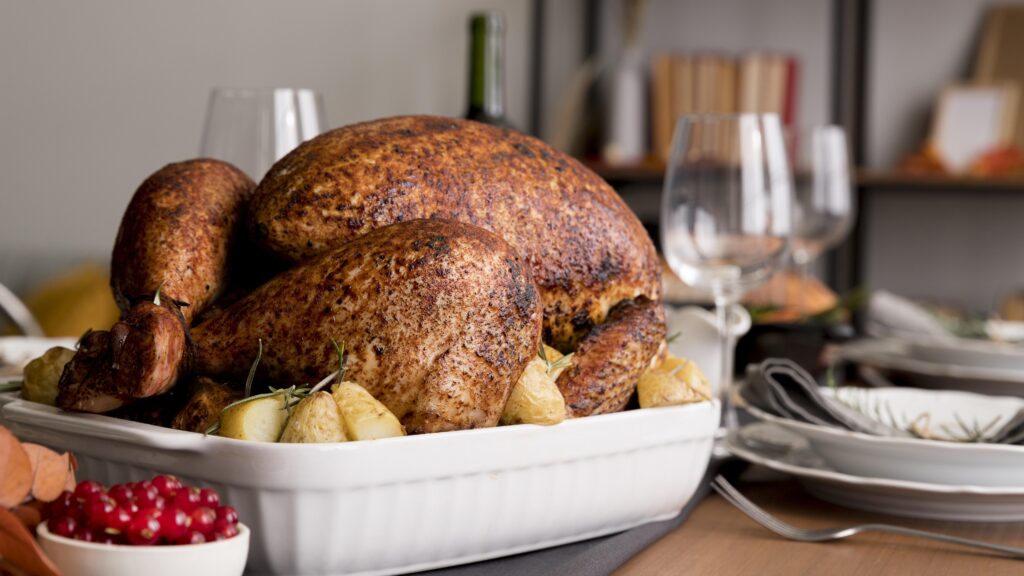
This brined turkey delivers juicy, flavorful meat that stays tender and forgiving—even if the day gets a little hectic. Brining seasons the turkey from the inside out, helping it retain moisture and resist overcooking. With a little planning ahead, the result is a beautifully roasted centerpiece that’s worth every minute.
Recipe
For the Brine:
- 1 whole turkey (12–16 pounds), thawed if frozen
- 1 cup kosher salt
- 1 cup sugar
- 1 gallon hot water
- 1 gallon cold water
- 2–3 bay leaves
- 1 teaspoon whole cloves
- Ice
For Roasting:
- 1–2 tablespoons neutral oil (such as avocado or vegetable oil)
- 1 cup water (for roasting pan)
Instructions
1. Dissolve the Base
In a large container, stir the kosher salt and sugar into 1 gallon of hot water until fully dissolved.
2. Cool the Brine
Add 1 gallon of cold water, bay leaves, cloves, and a handful of ice to ensure the brine is completely cold before adding the turkey.
3. Add the Turkey
Place the turkey breast-side down into the brine. The liquid should fully submerge the bird. If needed, weigh it down with a plate.
4. Brine
Refrigerate for 18–48 hours. If using a cooler, ensure the temperature remains below 40°F for food safety.
5. Prep for Roasting
Preheat the oven to 450°F. Remove the turkey from the brine and discard the liquid. Pat the turkey very dry with paper towels.
6. Oil and Position
Place the turkey on a roasting rack in a wide, low pan. Tuck the wings underneath and rub the skin evenly with oil.
7. Start Hot
Roast on the lowest oven rack for 30 minutes. Carefully remove the pan and add 1 cup of water to the bottom.
8. Lower and Cover
Reduce oven temperature to 350°F. Loosely tent the breast with foil and roast for 1 hour.
9. Finish Uncovered
Remove the foil and continue roasting for 15–30 minutes, or until a thermometer inserted into the thickest part of the thigh reads 160–165°F.
10. Rest
Let the turkey rest for 20–30 minutes before carving to allow juices to redistribute.
Total cooking time will vary depending on size but typically ranges from 2 to 2½ hours.
Getting Kids Involved
- Let them measure and stir the salt and sugar into the water for the brine.
- Younger helpers can add bay leaves and cloves to the pot.
- Before roasting, kids can help pat the turkey dry (with supervision) and brush oil onto the skin.
- After resting, older kids can assist with arranging sliced turkey on a serving platter.
Pro Tips, Meal Prep and Time Savers
- Plan Ahead: Make space in the refrigerator before starting the brine. A large stockpot or food-safe brining bag works well.
- Dry Skin = Crispy Skin: Patting the turkey thoroughly dry before roasting helps achieve golden, crisp skin.
- Skip the Basting: Thanks to brining, basting isn’t necessary. The turkey will stay moist on its own.
- Save the Drippings: Strain and reserve pan drippings for gravy—they add incredible depth of flavor.
- Leftover Strategy: Store carved turkey in airtight containers for up to 4 days or freeze for up to 3 months. Perfect for sandwiches, soups, pot pies, and quick weeknight meals.
A properly brined turkey takes the pressure off holiday cooking and delivers consistent, flavorful results every time.
Print
The Best Brined Turkey
If you’ve never tried brining a turkey, this is a gentle place to start. It’s one extra step that makes a real difference—juicier meat, better seasoning throughout, and a little more breathing room on a busy cooking day. Once it’s part of your routine, it tends to stick.
This is the turkey that anchors our Thanksgiving table year after year. It’s simple, dependable, and forgiving—exactly what you want when there’s already a lot going on.
Ingredients
(Scale up or down as needed)
-
Water
-
1 cup sugar
-
1 cup kosher salt
-
1 (10–12 pound) turkey, fully defrosted
-
4 whole cloves
-
4 bay leaves
-
1 tablespoon vegetable or canola oil
Instructions
-
Place the sugar and salt in 4 cups of hot water. Stir until both are fully dissolved.
-
Transfer this mixture to a large stockpot. Add 1 gallon of cold water, the cloves, bay leaves, and a handful of ice to be sure the brine is completely cool. Stir to combine.
-
Place the turkey breast-side down in the brine. The liquid should just cover the bird.
-
Refrigerate for 18–48 hours. If refrigerator space is tight, you can also place the covered pot in a safe outdoor spot as long as the temperature stays below 55°F.
-
When you’re ready to roast, preheat the oven to 450°F. Remove the turkey from the brine and discard the liquid.
-
Set the turkey on a roasting rack inside a wide, low pan. Pat the skin dry with paper towels, tuck the wings back, and rub the skin lightly with oil.
-
Roast on the lowest oven rack for 30 minutes. Loosely cover just the breast with foil—this helps it cook more evenly with the legs and wings.
-
Pour 1 cup of water into the roasting pan, reduce the oven temperature to 350°F, and continue roasting for 1 hour.
-
Remove the foil and roast another 15–30 minutes, until a thermometer inserted into the thickest part of the thigh (avoiding the bone) reads 160–165°F. Total roasting time will usually fall between 1 hour 45 minutes and 2 hours, depending on the size of your turkey.
-
Let the turkey rest for 20–30 minutes before slicing. This step really matters for juicy meat.
Slice and serve when ready.
Notes
-
Outdoor brining option
If fridge space is limited, brining outside can work well in colder weather. Just be sure the temperature stays below 55°F and the turkey is well covered. -
Use a thermometer
White and dark meat cook at different rates. Checking a few spots takes the guesswork out and gives you more confidence. -
About internal temperature
Poultry is considered safe at 165°F, but pulling the turkey at 160°F and letting it rest allows carryover cooking to finish the job. Resting also helps the juices stay where you want them—in the meat, not on the cutting board.